
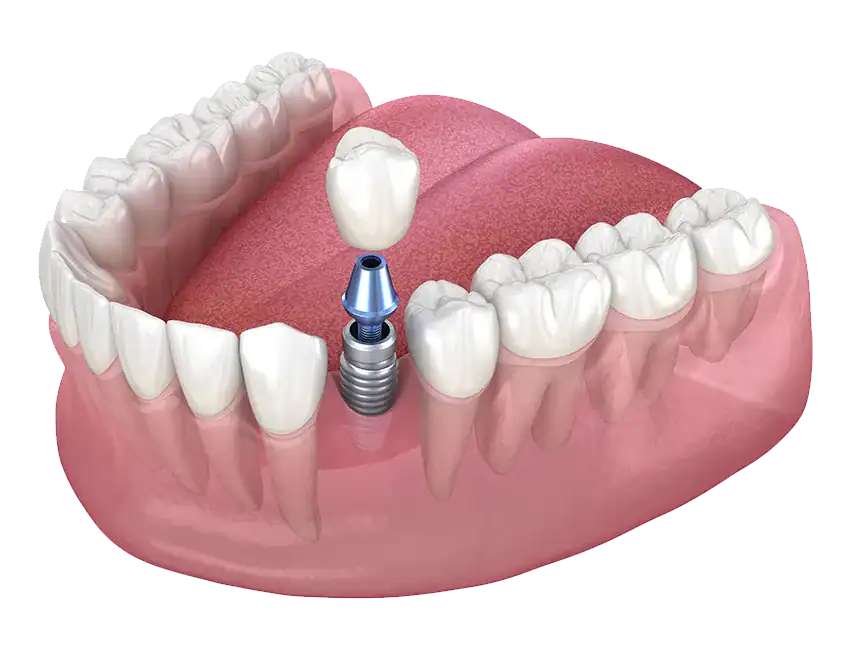
An implant price is a total of separate steps, so the same missing tooth can carry very different estimates.
Are you looking at a gap in your smile and wondering what a replacement will cost? The cost of dental implants depends on the patient’s mouth, because the final figure is a total of several separate pieces. A dental implant is a titanium post placed in the jawbone that holds a custom crown, so the price covers surgery, hardware and a tooth made to fit.
Few patients need the same mix of surgery, hardware and crown. This guide explains what each estimate includes, what moves the number up or down and how to compare one plan with another.
Quick Answer
Dental implants are priced as a total of several steps, so the cost depends on each patient’s mouth. Surgery, the abutment, a custom crown, imaging and any bone grafting each add to the estimate. The dentist gives a personalized estimate after an exam, and asking for it itemized makes plans easy to compare.
Key Takeaways
- An implant estimate bundles surgery, the post, an abutment and a custom crown into one total.
- Bone volume, the number of teeth replaced and their position in the mouth change the price.
- Bone grafting or a sinus lift is a separate procedure and may add healing time.
- A low estimate can leave out the crown or imaging, so compare what each estimate lists.
- An itemized estimate, a free second opinion and financing questions help you compare plans with confidence.
What Is Included in the Price of One Implant?
An implant price covers three phases of treatment plus the supporting steps around them. According to MouthHealthy from the American Dental Association, getting an implant generally happens in three phases. The post is surgically placed in the jawbone, the bone heals around it, and then the replacement tooth is attached. Each phase carries its own costs.
Behind those phases sit the smaller line items. Imaging maps the bone before anything is placed, and anesthesia or sedation keeps the surgery comfortable. A small connector, called an abutment, joins the post to the crown, and the crown itself is custom made for size, shape, color and fit.
A temporary tooth may also be part of the plan because the permanent crown takes time to make. That temporary tooth may be listed as its own line on an estimate, or folded into the crown.
Why Do Two Implant Plans Cost Different Amounts?
The first reason is how many teeth are being replaced. One missing tooth needs one post and one crown. A full row of missing teeth can use fewer posts than teeth, but the set of replacement teeth on top is larger and more involved. A single implant and a full-arch restoration are priced as different kinds of treatment.
Where the tooth sits matters too. A front tooth has to match its neighbors in shade and shape, which can call for more careful lab work. A molar sits under heavy chewing force, which can influence the size of the post and the crown material.
Crown materials differ in cost and appearance, so the material chosen changes the total.
Does Bone Grafting Add to the Total?
It can, when the jaw has too little bone. An implant needs enough healthy bone to hold it, and bone that has thinned after a tooth was lost may need to be rebuilt first. A graft, or a sinus lift in the upper back jaw, is a separate procedure with its own fee.
Bone grafting can also add time. If the bone needs to heal before a post goes in, the timeline stretches along with the budget. In that case the patient heals twice, first after the graft and again after the post. A scan shows whether the bone is already thick enough.
General health affects the cost too. Chronic illnesses such as diabetes can interfere with healing, and tobacco can slow it. A mouth that heals slowly may need extra steps, and extra steps carry extra cost.
How Do I Compare Implant Estimates From Different Offices?
Start by checking that both estimates describe the same work. One estimate might include the scan, the surgery, the abutment and the crown, while another covers only the post. The lower number can simply be the shorter list.
The surgeon and the office affect the fee too. Surgery performed by a specialist, in an office with sedation options, can be priced differently from a basic placement. Some estimates include follow-up visits and adjustments after the crown goes on, and others charge for them separately.
Ask for an itemized estimate from every office. Two itemized plans side by side show which steps overlap and which are missing.
How Do People Pay for an Implant?
Dental insurance coverage for implants varies. One plan may pay a portion, another may exclude implants altogether, and a plan’s annual maximum can run out before treatment ends. An annual maximum is the most a plan pays in one year, so costs beyond it fall to the patient. Because grafting, surgery and the crown are separate steps, a dentist can schedule the steps, when the treatment plan allows, so part of the work falls in a new benefit year.
Ask the practice about monthly payment plans or third-party financing. Health savings and flexible spending accounts can be used for implant treatment as well, since the work is a dental expense. Plan rules differ, so the written benefits summary is the reliable guide.
Can I Get a Second Opinion on an Implant Plan?
Yes, and the practice offers a free second opinion on treatment plans. Bring any estimate you have already received, including one from another office. Putting two plans next to each other shows what each one includes and what it leaves out.
Frequently Asked Questions
What is an abutment on a dental implant?
An abutment is the small connector that joins the implant post to the crown. It is usually listed as its own line on an estimate, or folded into the crown price. Asking how an estimate treats the abutment helps you compare two plans fairly.
Is dental implant surgery painful?
Anesthesia or sedation is part of the plan to keep the surgery comfortable. Ask the dentist which option is planned for you and what to expect afterward. The answer depends on the patient, the number of implants and whether a bone graft is needed first.
Will I have a temporary tooth while the crown is made?
A temporary tooth may be part of the plan, because the permanent crown takes time to make. Whether it appears as its own line or is folded into the crown price varies by estimate. Ask the dentist what the plan includes for the time between surgery and the final crown.
Related Reading
- How a sinus lift adds bone height for an implant
- Five signs a dental implant may be the right replacement
About the Author
This post was reviewed by Dr. Tammy N. Tran, DDS. She earned a B.S. in chemistry from UCLA and her dental degree from Case Western Reserve University. She practices family dentistry for children and adults with a preventive, conservative approach.
- If you want a personalized estimate, visit our Dental Implants in Long Beach, CA, page or schedule a consultation.